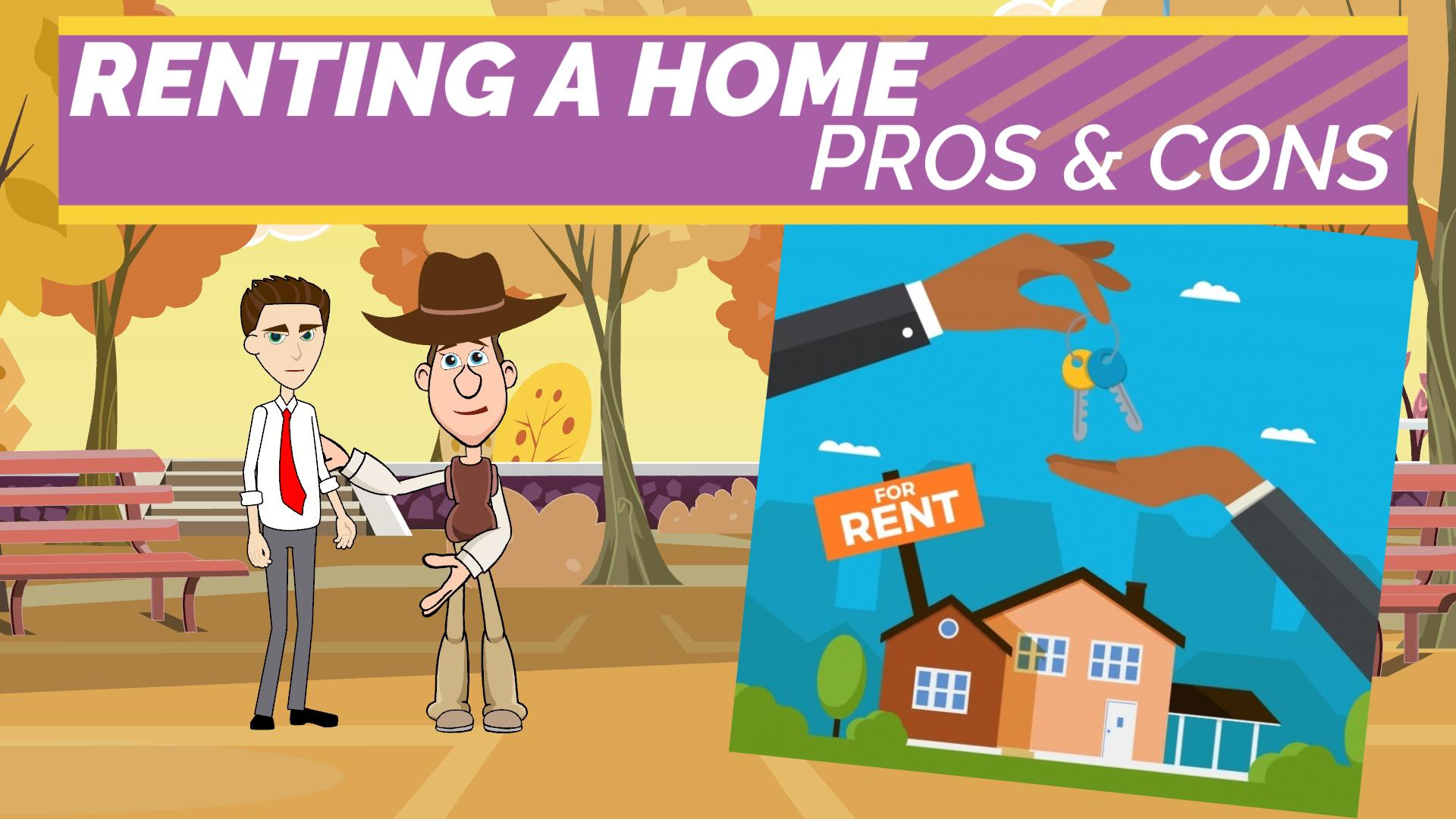
Introduction to Renting for Kids and Teens
This video explains the concept of renting a home or house in a simple, concise way for kids and beginners. It could be used by kids & teens to learn about renting, or used as a money & personal finance resource by parents and teachers as part of a Financial Literacy course or K-12 curriculum.

Suitable for students from grade levels:
- Kindergarten
- Elementary School
- Middle School
- High School
The topics covered are:
- What is renting a home and how does it work
- What are the advantages of renting a home
- What are the disadvantages of renting a home
Interactive Learning Experience: The Renter’s Inventory
Wondering if renters insurance is worth it? In this app, guess what it would cost to replace everything you own. Then add up your possessions one by one, and see how close you were.
The Renter's Inventory
Before you look at a single price: if everything in your home vanished tonight, what would it cost to buy it all again, new?
One number. No peeking at the list first.
Now furnish the place. Drag anything you own into your home, or tap it. Change any amount to what it would really cost to buy new.
The items and prices here are made up and are meant to be edited. One thing worth knowing before you compare a policy: replacement cost coverage pays what a new one costs today, and actual cash value coverage pays what your five-year-old sofa is worth today, which is far less. Policies also cap certain categories, so expensive jewellery and electronics are often covered only up to a small limit unless you list them separately.
What is renting a home and how does it work?
Renting a home, also known as leasing, is an agreement where the owner of a home allows someone else to use it for a certain period of time in exchange for regular payments.

The homeowner is called the landlord, and the person occupying the home is called the tenant.
The agreement is called the lease, and the monthly payment is called the rent.
The home can be a single family home, a town house, an apartment or even a portion of a larger house. If the tenant stops paying rent, then the landlord can evict them from the home.
Books by Easy Peasy Finance

[This is an affiliate link: at no additional cost to you, we will earn a commission if you click & make a purchase]
What are the advantages of renting a home?
There are several advantages.

- You can rent a home very quickly with minimal upfront costs or paper work. Most landlords require a security deposit and the first month’s rent before you can move into the home.
- Credit requirements aren’t very stringent. As long as you don’t have a terrible credit history, you should be able to rent a home.
- All repairs and maintenance on the property is the landlord’s responsibility – so if your air conditioner stops working or the roof leaks, all you have to do is call your landlord.
- Renting also gives you the freedom and flexibility to move, without worrying about any financial implications like selling your home or finding a good tenant.
- Tenants don’t have to pay property tax or HOA (Home Owners’ Association) fees.
- As a tenant, you don’t have to worry about the fluctuating real estate prices bringing down the property’s value.
- If it’s a furnished rental, you can save quite a bit of effort and money.
What are the disadvantages of renting a home?
Yes, there are some disadvantages to renting.

- You don’t build any home equity – the rent continues forever.
- While the upfront costs may not be high, you may still need to pay commissions and fees as high as a month’s rent.
- Since the home belongs to someone else, you don’t have much of a say in the decor or the flexibility to make home improvements as per your liking.
- Landlords can and usually do increase the rent when the lease is up for renewal.
- There is a risk of being forced to vacate at a short notice if the landlord decides to sell.
- You don’t have any tax incentives like writing off property taxes or mortgage interest.
Is renting a home the right choice for me? Who should rent a home?
That’s an excellent question, Sooper Cooper. But that’s a topic for another time…
Download Transcript: Ideal for Use by Teachers in their Lesson Plan to Teach Kids & Teens
Podcast: Pros and Cons of Renting a Home
Fun, informative and concise episodes by a 16-year old, breaking down complex financial concepts in a way that kids and beginners can understand. Episodes cover personal finance topics like saving, investing, banking, credit cards, insurance, real estate, mortgage, retirement planning, 401k, stocks, bonds, income tax, and more, and are in the form of a conversation between a cowboy (a finance novice) and his friend, a stock broker. Making finance your friend, only at Easy Peasy Finance.
A little bit about me: I have been fascinated with the world of personal finance since I was 6! I love to read personal finance books, and keep myself updated on the latest by reading various personal finance magazines. My friends often ask me questions about finance because they find it complex and intimidating. That’s what inspired me to start my YouTube channel called Easy Peasy Finance when I was 8, and this podcast 2 years later.
Everything you need to know before renting a home: What is renting a home and how it works, what are the advantages of renting a home, what are the disadvantages of renting a home, and more. Show notes and transcript at: Renting a Home – Pros and Cons: A Simple Explanation for Kids, Teens & …