Part 1: What is ACH Transfer, How Do ACH Payments Work, Different Types of ACH Transfers, Cost of ACH Payments

Part 2: Advantages of ACH Transfers, Disadvantages of ACH Payments, Alternatives to ACH Transfers

Introduction to ACH Transfer for Kids and Teens
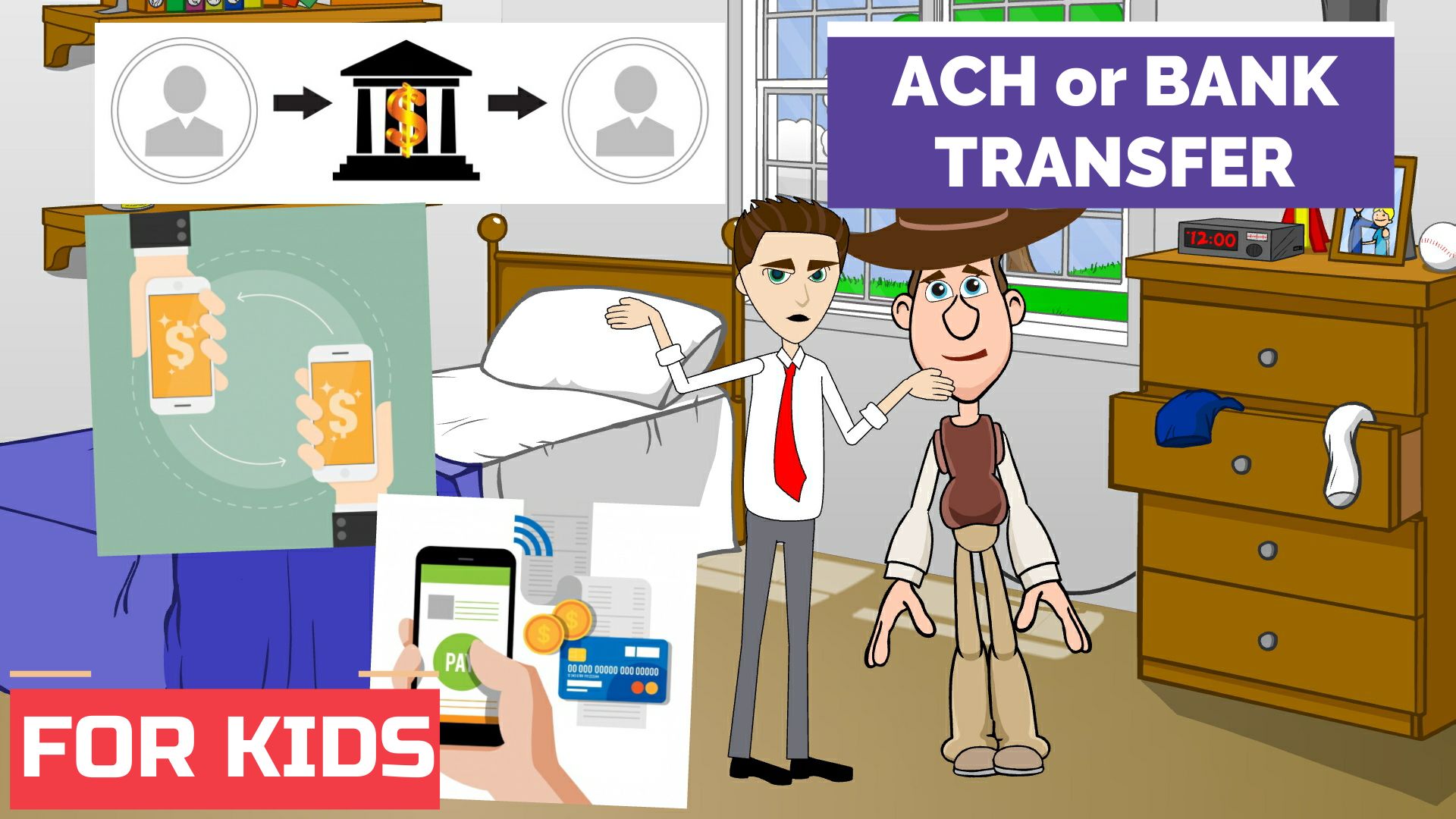
This video explains the concept of ACH transfer in a simple, concise way for kids and beginners. It could be used by kids & teens to learn about ACH payment, or used as a money & personal finance resource by parents and teachers as part of a Financial Literacy course or K-12 curriculum.

Suitable for students from grade levels:
- Middle School
- High School
The topics covered are:
- What is an ACH transfer
- How does an ACH transfer work
- Different types of ACH transfers
- How much do ACH transfers cost
- Advantages of ACH transfers
- Disadvantages of ACH transfers
- Alternatives to ACH transfers
Old version
- What is ACH transfer
- Why is it called ACH transfer
- How does an ACH payment work
- How long does an ACH transfer take
- How much do ACH payments cost / what is the fee
- What are the advantages of ACH transfers
- Are there any disadvantages of ACH transfers
Interactive Learning Experience: When Will It Land
Pick the day and time you hit send and find out exactly when an ACH transfer actually arrives. A calendar shows which days are in the way.
Standard, next-day and Same Day ACH each behave differently. Sending at 5:01pm on the Friday of a holiday weekend is very different from sending at 9am on a Tuesday.
When Will It Land
When you hit send
Type of transfer
You hit send It could land Bank closed
Figures as of January 2026. Assumes a 5:00 PM cutoff for standard and next-day transfers and 2:45 PM for Same Day ACH; your own bank may set these earlier. Weekends and federal holidays are not business days, and the Federal Reserve stays open the Friday before a Saturday holiday but closes the Monday after a Sunday one.
What is an ACH transfer?
An ACH transfer is a safe and convenient way to move money electronically from one person to another through their banks or credit unions.
This is done using the Automated Clearing House (or ACH) network, and no physical money is exchanged.
It’s used for bill payments, direct deposits from employers, transferring money to friends and family, and making recurring deposits into an individual retirement account (IRA), a brokerage account, a college savings account, etc.
Books by Easy Peasy Finance

[This is an affiliate link: at no additional cost to you, we will earn a commission if you click & make a purchase]
How does an ACH transfer work?
To initiate an ACH transfer, you need to provide the recipient’s details to your bank. This includes their name and account number, their bank’s routing number, the amount you wish to transfer, etc.
Your bank verifies that there is enough money in your account, and then uses the ACH network to transfer the money to the recipient’s account.
ACH transfers are not instantaneous – they are processed in batches at set times during the day. The transfer can take anywhere from 1 to 3 business days.
If you’re in a rush, you can request same day processing for an additional fee.
National Automated Clearing House Association or NACHA, a non-profit organization funded by banks, credit unions, and payment processing companies, is responsible for operating the ACH network.
Are there different types of ACH transfers?
There are mainly two types of ACH transfer – Direct Deposits and Direct Payments.
With direct deposits, as the name suggests, you receive money into your account via the ACH network – it could be your paycheck from your employer, government benefits through Social Security, tax refund from the government, etc.
They are also referred to as ACH credit or “push” transactions, since the money is pushed into your account.
With direct payments, you send money from your account via the ACH network – they are also referred to as ACH debit or “pull” transactions, since the money is pulled from your account.
For instance, when you set up automatic bill payment, or monthly mortgage payment, the company you are paying money to can pull the money from your account.
How much do ACH transfers cost?
Most banks offer ACH transfers for free. But if you need to expedite the ACH transfer, you can be charged an additional fee of around $10.
Also, if you initiate the transaction via phone instead of online, there could be a fee.
Similarly, if you don’t have sufficient funds in your account and the transaction fails, you can be charged a Non-Sufficient Funds (or NSF) fee ranging from $25 to $35 for each failed attempt.
What are the advantages of ACH transfers?

ACH transfers are a secure and convenient way of sending and receiving money online. They are often free and a lot more reliable and user-friendly than writing checks, which can get lost or misplaced.
Recurring ACH transactions like automatic bill payments help you avoid any late fees.
Another big advantage is they are reversible within 5 days of the transaction – so unauthorized or erroneous transfers can be fixed.
For instance, if you happen to send money to the wrong account or send more money than you intended, the transfer can be reversed and you can get your money back.
What are the disadvantages of ACH transfers?
ACH transfers are not instantaneous – they take anywhere from 1 to 3 business days. So if you initiate a transfer on a Friday night before a long weekend, the recipient may not receive the money until the following Thursday.
If you need to expedite the transfer, you would need to pay additional fees.
Banks may restrict how much money you can send via ACH by imposing daily, weekly or monthly limits. They may also permit only a certain number of ACH transactions in a given time period, or prohibit international transfers.
If you initiate the transaction via phone or by visiting your bank instead of online, there could be a fee.
Also, if you don’t have sufficient funds in your account and the transaction fails, you would be charged a non-sufficient funds (or NSF) fee ranging from $25 to $35 for each failed attempt.
What are some alternatives to ACH transfers?
Newer digital payment platforms, also called peer-to-peer services, like PayPal, Venmo, Zelle, Apple Pay, Google Pay, etc. are popular alternatives to ACH transfers and are usually free.

These platforms are more user-friendly and better suited for smaller, more frequent transactions.
They also don’t require the recipient’s banking information: you just need the recipient’s email address or phone number.
The money you send doesn’t have to come from your bank account – it can also be from your credit card or in-app balance.
But their biggest benefit is their speed: transfers are completed within minutes, giving them a huge edge over ACH, particularly for domestic transactions.
For international transfers, wire transfers are often preferred due to their high security and established trust among financial institutions.
Some other traditional alternatives to ACH transfers are money orders, cashier’s checks and other money transfer services like MoneyGram or Western Union, that often charge a fee.
What are the differences between ACH transfer and wire transfer?
That’s a great question, Sooper Cooper.
Check this out for more information: Comparison: Bank Transfer or ACH vs Wire Transfer – A Simple Explanation
What is ACH Transfer / ACH Payment: Old Version

I recently read about an ACH transfer or bank transfer. But…
What is ACH transfer?
An ACH transfer is a popular method of sending or receiving money electronically.
It is also widely used for paying bills online, and for direct deposit of salary.
Why is it called ACH transfer?
ACH stands for Automated Clearing House.
The money transferred is cleared through the Automated Clearing House network, hence the name ACH transfer.
How does an ACH payment work?
There are two ways. Money could be pulled from your account, which happens when you set up recurring payments like an electricity bill payment.
Or money could be pushed from your account, which happens when you initiate a specific transfer, like sending money to a friend.
How long does an ACH transfer take?
It takes 2-5 business days.
How much do ACH payments cost? What is the fee?
Banks usually do not charge anything for ACH transfers – it’s free!
What are the advantages of ACH transfers?
Did you not hear the free part?
Apart from being free, they are also way more convenient than writing and mailing checks.
Recurring ACH transactions like automatic bill payments also help you avoid any late fees.
Are there any disadvantages of ACH transfers?
Since ACH transfers takes 2-5 business days, they may not suit all money transfer needs.
Also, usually there are daily and weekly limits on ACH transfers imposed by banks.
Podcast: What is ACH Transfer or Bank Transfer
Fun, informative and concise episodes by a 16-year old, breaking down complex financial concepts in a way that kids and beginners can understand. Episodes cover personal finance topics like saving, investing, banking, credit cards, insurance, real estate, mortgage, retirement planning, 401k, stocks, bonds, income tax, and more, and are in the form of a conversation between a cowboy (a finance novice) and his friend, a stock broker. Making finance your friend, only at Easy Peasy Finance.
A little bit about me: I have been fascinated with the world of personal finance since I was 6! I love to read personal finance books, and keep myself updated on the latest by reading various personal finance magazines. My friends often ask me questions about finance because they find it complex and intimidating. That’s what inspired me to start my YouTube channel called Easy Peasy Finance when I was 8, and this podcast 2 years later.
All you need to know about ACH Transfers or Bank Transfers: What is ACH Transfer or Bank Transfer, Why is it called ACH transfer, How does an ACH transfer work, How long does an ACH transfer take, How much do ACH Transfers cost – What is the ACH Transfer / Bank Transfer fee, What are the advantages of ACH transfers, Are there any disadvantages of ACH transfers, and more.
Show notes and transcript at: https://www.easypeasyfinance.com/what-is-ach-transfer-or-bank-transfer/